
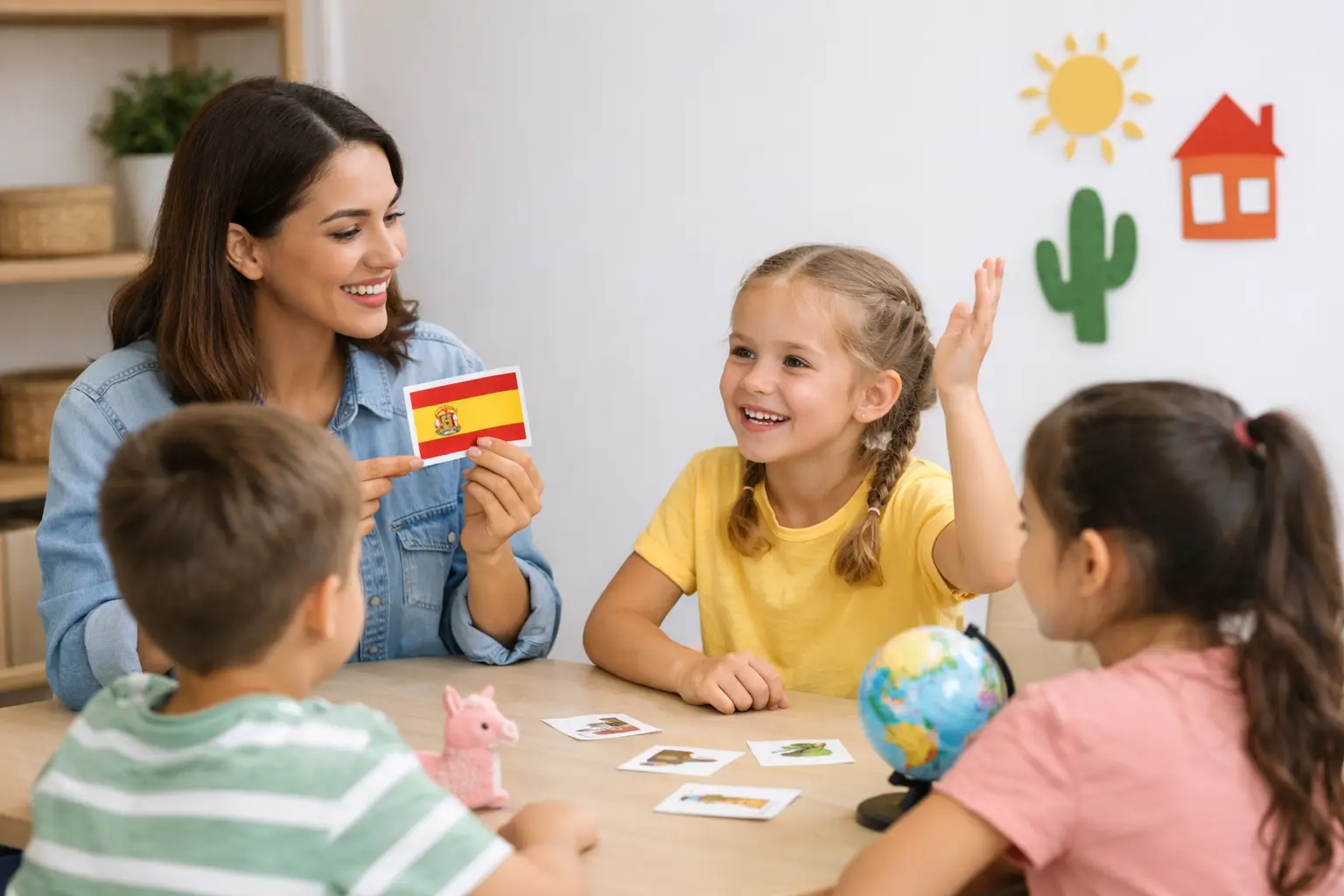
A child who proudly says hola at the grocery store is doing more than repeating a new word. They are building listening skills, confidence, memory, and a willingness to try something unfamiliar. That is why introductory Spanish classes for children can be such a meaningful part of early learning, especially when lessons are designed for young learners and taught with patience, structure, and encouragement.
For many parents, the question is not whether Spanish is valuable. It is when to begin and what a good beginning should look like. In the early years, children are naturally open to language. They notice sounds, patterns, and repetition more easily than many adults do. With the right instruction, Spanish can feel less like a subject to memorize and more like a joyful extension of how they already learn.
Why introductory Spanish classes for children work well in the early years
Young children learn best when language is connected to movement, routine, music, images, and real-life context. They do not need long grammar explanations to make progress. They need consistent exposure, clear modeling, and enough repetition to help new words stick.
A strong early Spanish class often focuses on practical vocabulary first. Children might learn greetings, colors, numbers, family words, common animals, classroom objects, and simple phrases they can use right away. This gives them quick wins. When a child can count to ten, name colors, or respond to a simple question, they begin to feel capable. That confidence matters.
There is also an academic benefit that parents sometimes overlook. Learning another language supports attention, listening, memory, and pattern recognition. These skills connect naturally to broader school readiness. For preschool and elementary students, that can support growth far beyond one subject area.
What children should learn in introductory Spanish classes
Not every beginner class is built the same. Some are playful but too unstructured, so children have fun without retaining much. Others move too quickly and feel more like a middle school textbook lesson than an early childhood program. The best approach usually sits in the middle.
In effective introductory Spanish classes for children, the goal is steady, age-appropriate progress. A young beginner does not need to master verb charts. They do need to hear and use Spanish in ways that feel understandable and engaging. A solid class often includes pronunciation practice, simple vocabulary themes, listening activities, repetition through songs or games, and opportunities to speak without pressure.
The pacing should match the child’s developmental stage. A kindergartener may thrive with short activities and lots of visual support. An older elementary student may be ready for more sentence building, question-and-answer practice, and beginner reading or writing. It depends on the child’s age, attention span, and prior exposure.
That is one reason personalized instruction can make such a difference. When lessons are adjusted to meet a child where they are, learning tends to feel more successful and less frustrating.
Signs a Spanish class is truly child-centered
Parents can usually tell fairly quickly whether a class was designed for children or simply adapted from an older curriculum. A child-centered Spanish program feels active, encouraging, and developmentally appropriate.
The teacher should invite participation without putting children on the spot in a way that creates stress. Beginners often need time to listen before they feel ready to speak. That is normal. A supportive instructor makes room for that process while still encouraging gentle practice.
It also helps when lessons are predictable. Young learners benefit from routines. If each class includes a greeting, review, new vocabulary, guided practice, and a closing activity, children begin to feel secure. That structure supports focus and helps them know what to expect.
You will also want to see progress that is visible in small ways. A child may begin recognizing familiar words, answering simple prompts, singing along to a song, or naming objects around the house in Spanish. Early growth often looks modest from the outside, but those small steps are exactly how strong foundations are built.
How introductory Spanish classes for children support confidence
Confidence is one of the most valuable outcomes of early language learning. For some children, trying a new language feels exciting right away. For others, it can feel vulnerable. They may worry about saying a word incorrectly or not remembering what they learned last week.
This is where the learning environment matters just as much as the curriculum. When children are taught in a setting that values effort, celebrates progress, and keeps expectations realistic, they are more willing to participate. That willingness carries over into other academic areas too.
A child who learns that it is okay to practice, make mistakes, and improve over time is learning an important lesson about school in general. Spanish becomes one more place where they can build resilience and confidence.
For families of children who need extra support, this can be especially meaningful. A carefully paced enrichment class can give students the experience of success without the pressure they may feel in other subjects. When instruction is warm and personalized, children are more likely to stay engaged and keep growing.
What parents should look for before enrolling
Choosing the right class starts with understanding your child, not just the schedule. Some children do well in a small group where they can learn alongside peers. Others benefit more from private or semi-private support, especially if they are shy, easily distracted, or need a slower pace.
Ask how the class handles beginners. A true introductory program should assume little to no prior Spanish. It should not expect children to keep up with students who already know basic vocabulary at home. If your child is brand new to the language, that distinction matters.
It is also worth asking how teachers keep children engaged. Young students learn through interaction. They need more than worksheets. Songs, visuals, games, movement, conversational practice, and hands-on reinforcement all support retention. At the same time, fun alone is not enough. The class should still have clear learning goals and a thoughtful sequence.
Parents of homeschool students may want to look for a program that complements home instruction and adds social interaction. Families seeking after-school enrichment may care more about convenience and steady weekly progress. Neither goal is better than the other, but the right fit depends on what your family needs most.
The value of a strong foundation over fast results
It can be tempting to look for a class that promises quick fluency, but that is rarely how lasting language learning works for children. Early success comes from repetition, consistency, and positive experiences with the language over time.
A good beginner class helps children build familiarity first. They learn to hear the sounds of Spanish, connect words to meaning, and respond with increasing comfort. Later, those early experiences make it easier to expand into fuller conversations, reading, and writing.
The strongest language learners are not always the ones pushed the fastest. Often, they are the ones given a steady foundation and enough encouragement to keep going. That is especially true for elementary-age children, who are still building confidence as learners overall.
At OC Learning Edge, this philosophy aligns with how many families approach academic support: begin with the foundation, teach with care, and help each child progress in a way that feels both structured and encouraging.
When Spanish enrichment makes the biggest difference
There is no single perfect age to start, but early elementary and preschool years can be an excellent time to introduce Spanish in a gentle, consistent way. Children at this stage tend to enjoy repetition, absorb sounds readily, and respond well to playful routines.
That said, readiness is not only about age. Some children are eager for language exposure at four. Others are better prepared at seven or eight, when they can focus longer and remember weekly material more independently. If your child is curious, engaged, and able to participate in guided activities, they may be ready to begin.
The key is choosing a class that respects their stage of development rather than expecting them to perform beyond it. A strong introduction to Spanish should leave a child feeling proud, not pressured.
When children are given that kind of start, language learning becomes more than an enrichment activity. It becomes a way to grow communication skills, academic confidence, and curiosity about the world around them. Sometimes it begins with one simple word, spoken with a smile, and grows from there.