
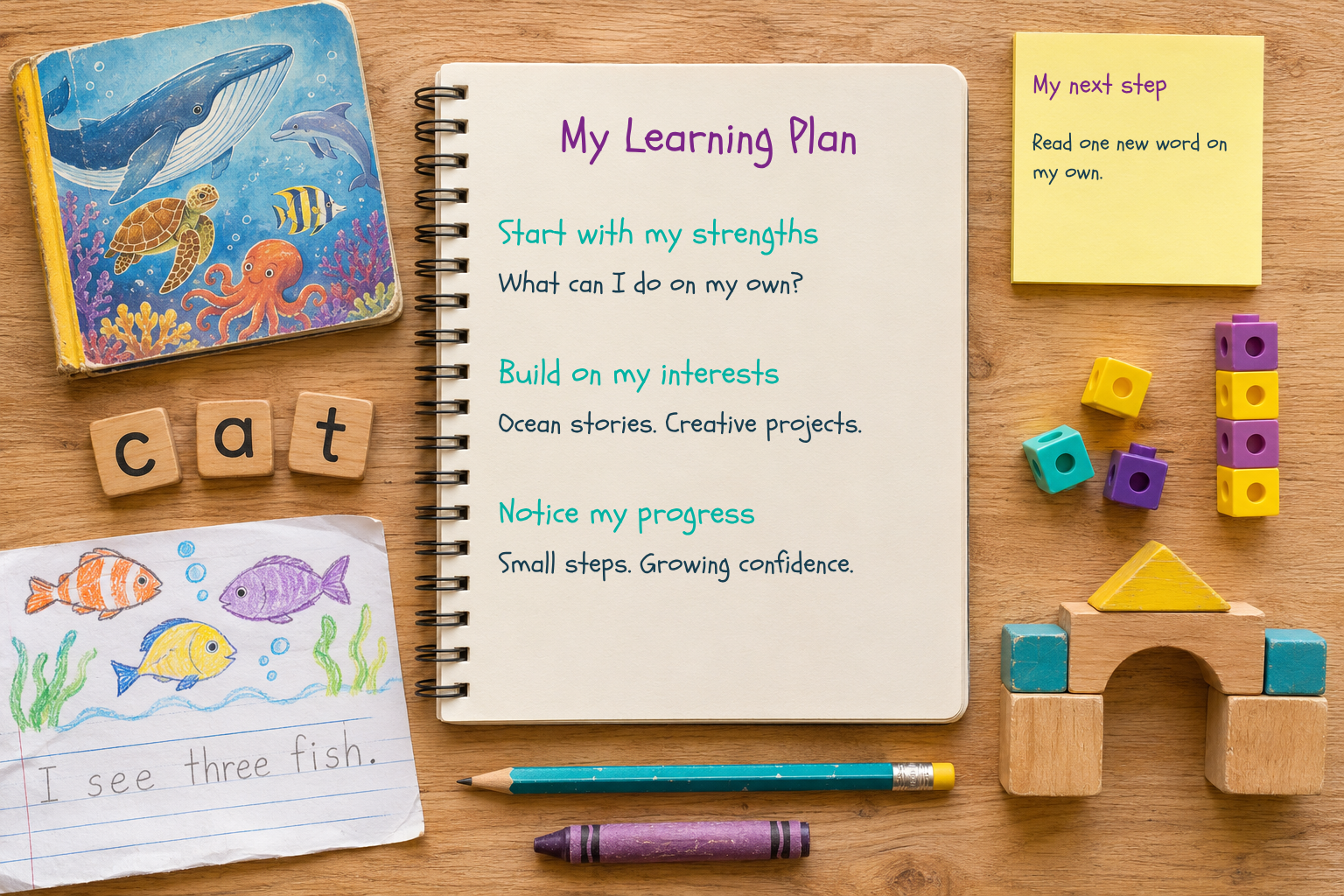
A child can sit in a classroom, complete every worksheet, and still need something different to truly understand the material. That is why personalized learning trends are gaining attention among parents and educators. For young children especially, meaningful progress often begins when instruction responds to their current skills, interests, pace, and confidence level rather than asking them to fit one standard path.
For Orange County families, this shift is especially relevant. Parents are balancing busy school schedules, homeschool plans, learning gaps, enrichment goals, and the simple wish to see their child enjoy learning again. Personalized instruction is not about making education more complicated. At its best, it helps children receive the right support at the right time.
Personalized Learning Trends That Matter Most
Some education trends are driven by new platforms or changing school policies. The most valuable trends for preschool and elementary students, however, are grounded in a familiar idea: children learn more effectively when they feel seen, capable, and appropriately challenged.
Starting with the child’s actual skill level
Age and grade level offer useful general guidance, but they do not tell the entire story. Two second graders may both be working on reading, yet one may need support blending sounds while another is ready to build reading comprehension and vocabulary. The same is true in mathematics, writing, and language development.
Personalized learning begins with understanding what a child can do independently, where they become unsure, and which foundational skills need reinforcement. A thoughtful assessment does more than identify a low score. It can reveal whether a student is struggling with phonics, fluency, number sense, handwriting stamina, organization, or confidence after repeated frustration.
This approach helps prevent a common problem: moving ahead before the foundation is secure. When children strengthen early skills, later learning often feels less overwhelming. They can spend more energy thinking, creating, and participating instead of trying to hide confusion.
Small-group learning with purposeful grouping
Personalization does not always mean one-on-one instruction. Semi-private classes and small groups can be highly effective when students are grouped thoughtfully by skill needs and learning goals. A child practicing beginning reading may benefit from hearing peers sound out words, while a young writer may gain ideas by sharing a sentence or describing a favorite topic.
The trade-off is that groups must remain small enough for each child to receive real attention. A group is not truly personalized simply because it has fewer students than a classroom. The instructor should still be able to adjust explanations, provide feedback, and notice when a child needs extra practice or a greater challenge.
For homeschool families, small-group instruction can also provide a valuable rhythm of structured learning and peer connection. It gives children a chance to practice listening, taking turns, communicating ideas, and celebrating progress alongside others.
Stronger attention to foundational literacy
One of the most encouraging personalized learning trends is the renewed focus on explicit foundational reading instruction. Families are asking more specific questions: Does my child know letter sounds? Can they blend sounds into words? Are they reading accurately but not understanding what they read? Do they avoid books because reading feels hard?
There is no single reading path that fits every child. Some students need direct phonics instruction and repeated practice with decodable text. Others can read words smoothly but need support with comprehension, vocabulary, and retelling. Children learning English may benefit from additional language development alongside reading instruction.
Personalized literacy support recognizes these differences. It also protects a child’s confidence. Instead of labeling a student as “behind,” a skilled teacher can identify the next teachable step and make practice feel achievable. Small successes matter. Reading one unfamiliar word independently or explaining a story in their own words can change how a child sees themselves as a learner.
Learning through interests, not just assignments
Children are more likely to persist when learning connects to something they care about. Interest-based learning is not a replacement for teaching essential skills. It is a way to make those skills more meaningful.
A child fascinated by animals might practice reading with nonfiction passages about ocean life. A student who loves building may use blocks or drawings to explore addition, measurement, and patterns. A reluctant writer may be willing to create a comic strip, a list of soccer tips, or a letter to a favorite character before moving into more formal composition.
The goal is not to entertain children every minute. Productive learning includes effort, revision, and practice. But when a child sees a reason to use a skill, they are often more willing to work through the challenging parts.
Progress tracking that parents can understand
Parents want to know more than whether a child attended a session or completed a worksheet. They want clear, practical insight into progress. Personalized learning increasingly includes regular communication about the skills a student is working on, the growth that has been observed, and the next goals.
For a young reader, that might mean moving from identifying letter sounds to blending short-vowel words with less prompting. For math, it may mean developing confidence with addition facts or learning to explain how they solved a problem. For writing, progress can look like stronger sentence structure, more detail, or greater independence in organizing ideas.
Useful progress updates should be specific without overwhelming families with educational jargon. They should also be honest. Growth is rarely perfectly linear. A child may grasp a concept one week and need reminders the next, particularly when the skill is new. That does not mean instruction is failing. It means the child is learning through practice and repetition.
What Personalization Should Not Become
Personalized learning is sometimes mistaken for children working alone on screens or choosing only the activities they already enjoy. Technology can support practice and provide useful feedback, but a screen cannot fully replace a caring educator who can notice hesitation, adjust a question, celebrate effort, or explain a concept in a new way.
It should also not mean lowering expectations. Personalized instruction can be both nurturing and appropriately challenging. A child who is ready for enrichment deserves opportunities to stretch their thinking. A child who needs intervention deserves direct instruction that closes gaps without shame. In both cases, the standard is meaningful growth.
Parents should be cautious of programs that promise instant results or rely only on broad labels such as “advanced” or “remedial.” The better question is: What specific skills will my child practice, and how will instruction change as they grow?
How Parents Can Use These Trends at Home
You do not need to redesign your home into a classroom to support personalized learning. Begin by observing patterns. Notice when your child seems energized, when they become frustrated, and which tasks they avoid. A child who resists homework may be tired, but they may also be signaling that the work is too easy, too difficult, or unclear.
Keep conversations encouraging and specific. Rather than saying, “You’re so smart,” try, “You kept working even when that word was tricky,” or, “I noticed you checked your math work carefully.” This reinforces effort, strategies, and persistence rather than the idea that ability is fixed.
It can also help to create a simple, predictable routine. Ten focused minutes of reading practice, a short writing activity, or a few well-chosen math problems may be more productive than a long session that ends in tears. Young children benefit from consistency, but the routine should remain flexible enough to honor their attention span and emotional needs.
When extra support is needed, look for instruction that begins with listening. At OC Learning Edge, personalized tutoring and enrichment are designed to help children build foundational skills while feeling encouraged throughout the process. The right learning environment gives families clarity, gives children room to grow, and keeps the joy of discovery within reach.
Every child deserves adults who look beyond a grade, a test score, or a difficult afternoon. With patient guidance and instruction that meets them where they are, children can build the skills and confidence to take their next step with pride.