
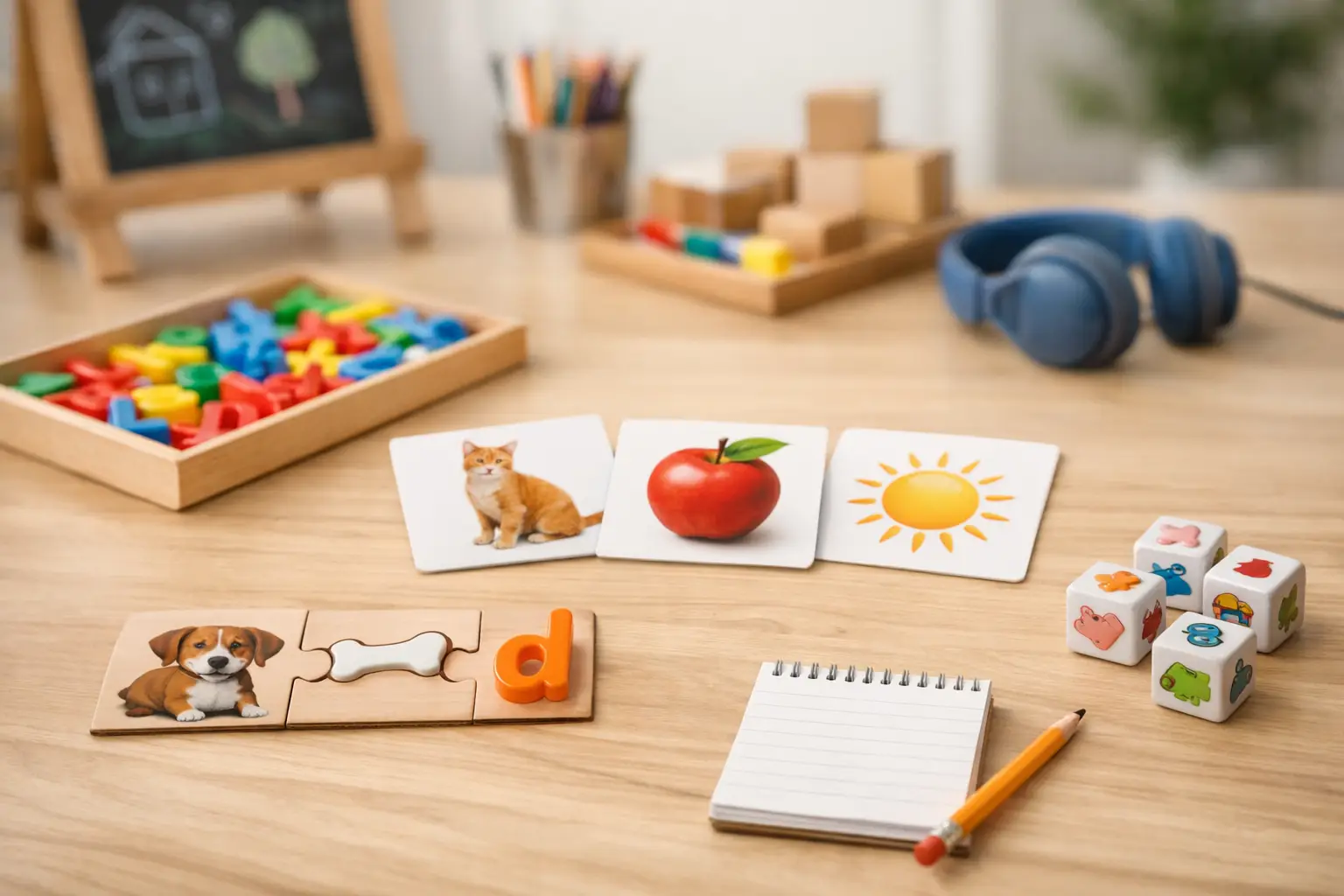
A kindergartener does not need to sit still for an hour to make meaningful reading progress. In fact, some of the best phonics activities for kindergarten happen in five- or ten-minute moments: while looking for a letter on a cereal box, stretching out the sounds in a favorite animal’s name, or building a silly word with magnetic letters. The goal is not to rush children into reading books independently. It is to help them understand that letters represent sounds, sounds blend into words, and reading is something they can do.
For parents, the most helpful activities are simple enough to repeat, flexible enough to match a child’s current skills, and playful enough that practice does not feel like a daily battle. A child who is still learning letter names needs a different starting point than a child who can identify sounds but struggles to blend them. Start where your child feels successful, then add one small challenge at a time.
What Strong Kindergarten Phonics Practice Looks Like
Phonics is the connection between print and speech. Children learn to recognize letters, say their sounds, hear sounds within spoken words, and eventually combine those sounds to read and spell. This process is most effective when it is explicit and systematic, but it should still feel encouraging and age-appropriate.
At this stage, prioritize common consonant sounds, short vowels, simple consonant-vowel-consonant words such as cat and sun, and the ability to blend and segment sounds. Letter names matter, but knowing the sound each letter makes is what helps children begin to decode words.
Avoid introducing too many new letters or word patterns at once. If your child is confusing b and d, for example, a stack of worksheets is unlikely to solve the problem. A few focused, hands-on repetitions with patient feedback will often be more productive.
10 Best Phonics Activities for Kindergarten
1. Go on a letter-sound hunt
Choose one letter sound, such as /m/, and ask your child to find objects around the house that begin with that sound. A mug, magnet, map, or mitten can all become part of the hunt. Say the word slowly together and emphasize the first sound: “Mmm-mug.”
This works especially well for children who learn through movement. Keep the focus on the sound rather than asking for a perfect list of items. If an object does not fit, gently model the correct sound and keep the game moving.
2. Build words with magnetic letters
Magnetic letters make phonics visible and easy to adjust. Start with three letters, such as s-a-t. Point to each letter as your child says the sound, then slide a finger beneath the word and blend: “/s/ /a/ /t/, sat.”
Once your child can read one word, change only the first letter: sat, mat, rat, hat. This helps children notice patterns without becoming overwhelmed. You can also ask them to build a word you say aloud, which adds early spelling practice.
3. Play sound-to-picture match
Gather a few small toys, printed pictures, or simple household objects. Place a letter card on the table and invite your child to choose the item that begins with that sound. For example, pair b with a ball or f with a fork.
As skills grow, make the game more challenging by listening for ending sounds. Ask, “Which picture ends with /t/?” Hearing sounds at the end of words is often harder than hearing beginning sounds, so offer plenty of modeling and praise.
4. Tap and blend with counters
For children who have trouble blending sounds, use three buttons, coins, or small blocks. Say a simple word such as map. Your child touches one counter for each sound: /m/, /a/, /p/. Then they sweep a hand beneath the counters and say the whole word.
This activity teaches that words are made of individual sounds in a clear, concrete way. Use words with three distinct sounds at first. Words like ship or chop can wait until your child understands that some sounds are represented by two letters.
5. Make a phonics parking lot
Draw several parking spaces on paper and label each one with a letter or a simple word family, such as -at. Give your child small toy cars with letters or picture labels taped to them. They park each car in the correct space.
A car labeled cat belongs in the -at space, while a car marked with m can park in the M space. This is a useful option for children who are reluctant to practice at a table but happily engage with toys.
6. Use a “mystery sound” bag
Place a few familiar items in a bag. Pull out one object, hide it in your hand, and give a sound clue: “This starts with /p/.” Your child guesses the object, then says the sound and letter with you.
The mystery adds excitement, but the learning remains focused. If your child guesses based on the object’s color or shape rather than its sound, simply restate the clue: “Listen again. I hear /p/ at the beginning.”
7. Read decodable books together
Decodable books are designed to let children practice sound patterns they have already learned. If your child has been working on short a words, a book with words like Sam, map, and cat gives them a real opportunity to apply that knowledge.
Take turns reading. You can read the story words that are not yet within your child’s phonics knowledge and let your child decode the words they can sound out. This protects the joy of reading while giving children meaningful practice.
8. Create a word family train
Write a word ending, such as -op, on the engine of a paper train. On separate train cars, write beginning letters including h, m, t, and p. As your child connects each car to the engine, read the new word: hop, mop, top, pop.
Word families help children see that changing one sound can create a new word. They are helpful for building fluency, although children should still practice blending each sound rather than relying only on guessing from a pattern.
9. Paint, trace, and say letters
Some children need more sensory practice before letters feel secure. Let your child form letters in shaving cream on a tray, trace them in sand, paint them with water outside, or write them with a finger on a textured surface.
As they form the letter, have them say its sound. Keep the language consistent: “This is m. It says /m/.” Multi-sensory practice can be particularly supportive when a child knows a sound one day but cannot recall it the next.
10. Play a daily sound game in the car
Phonics practice does not have to require materials. On the way to school or while waiting in line, say, “I’m thinking of an animal that starts with /d/,” or ask, “What sound do you hear first in sun?”
These brief conversations strengthen listening skills and make phonics part of everyday life. Keep them light. If your child is tired or uninterested, switch to a favorite song or story and try again another time.
A Simple Routine That Builds Confidence
Consistency matters more than length. For many kindergarteners, ten focused minutes a day is enough. Begin with one or two letter-sound review questions, practice a short activity, and finish with a book, rhyme, or word game your child enjoys.
Notice effort as much as correct answers. Instead of saying only, “That’s right,” try, “You listened carefully for the first sound,” or “You kept trying until you blended the word.” Specific encouragement helps children understand what they did well and makes mistakes feel like a normal part of learning.
It also helps to revisit skills often. A child may identify the letter t quickly on Monday and hesitate on Thursday. That does not mean the learning is lost. Young children need repeated, varied practice before a skill becomes automatic.
When Extra Phonics Support May Help
Every child develops at a different pace, but it is reasonable to seek support if your child consistently struggles to remember letter sounds, becomes upset during reading practice, cannot hear simple sounds in words, or is avoiding books altogether. Early support can close small gaps before they become more discouraging.
A personalized approach is especially valuable because the reason behind a struggle can vary. One child may need extra practice with auditory listening, while another may know individual sounds but need direct instruction in blending. At OC Learning Edge, phonics instruction is designed to meet children at their current level, build foundational skills step by step, and help reading feel possible again.
The best activity is the one your child can return to with growing confidence. Keep it playful, keep it predictable, and celebrate each new sound and word as proof that reading is beginning to make sense.