
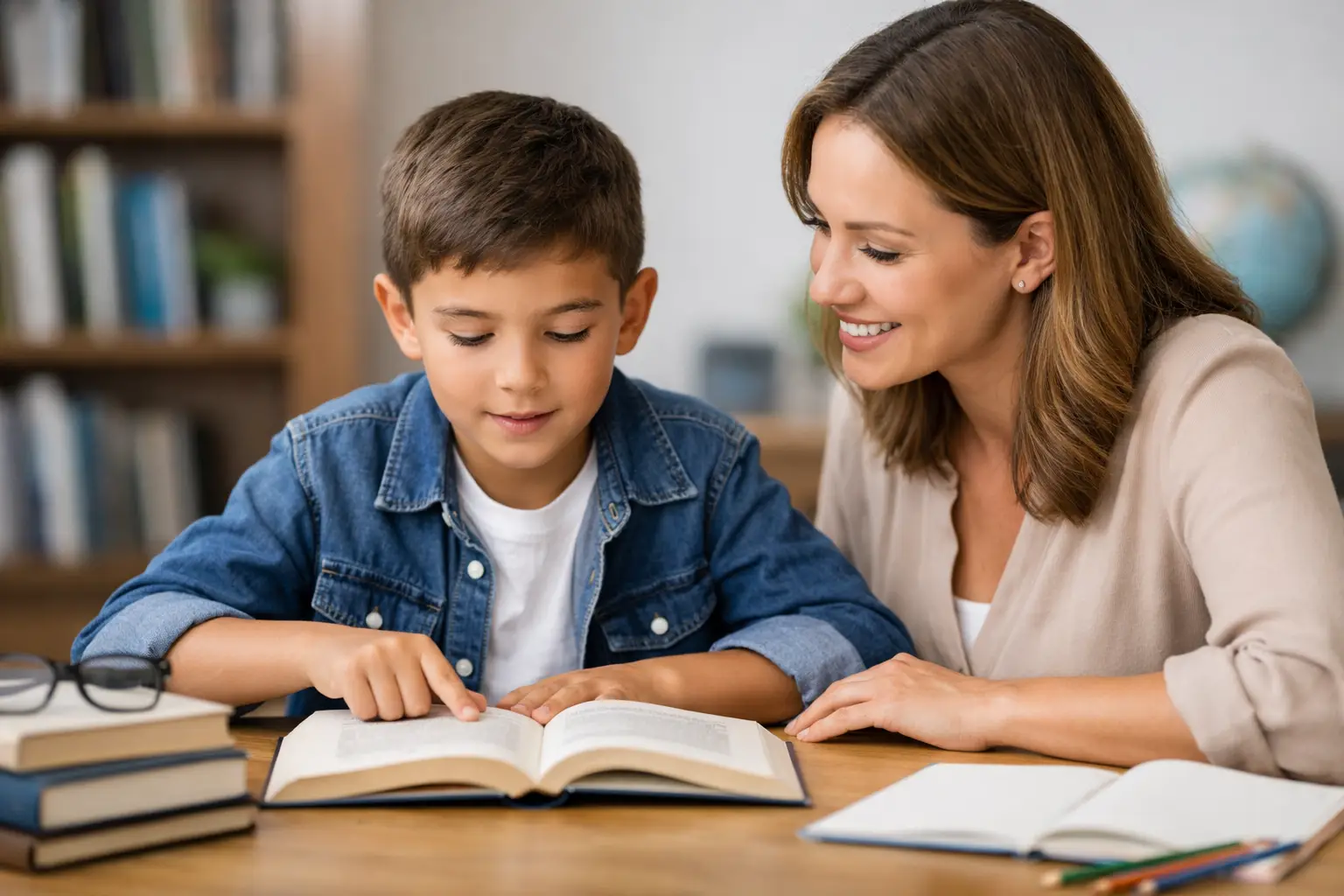
A child can read every word on the page and still miss the meaning. Parents often notice this when their child sounds fluent during read-aloud time but cannot answer simple questions afterward. That is exactly why is comprehension important for literacy development is such a valuable question. Reading is not just saying words correctly. Real literacy happens when children understand, connect, remember, and use what they read.
For young learners, comprehension is the bridge between basic reading skills and true academic growth. It turns reading from a decoding exercise into a meaningful experience. When children understand language, stories, and information, they become more confident readers, stronger writers, and more independent learners across every subject.
Why Is Comprehension Important for Literacy Development?
Comprehension is the purpose of reading. Phonics, sight word recognition, and fluency all matter, but they support a larger goal: making meaning from text. If a child can pronounce a sentence but does not understand what happened, why it happened, or what the author is trying to say, literacy development is incomplete.
This matters because literacy is not limited to reading class. Children need comprehension to follow directions in math, understand word problems, learn science concepts, participate in social studies discussions, and write clear responses. A child who struggles with comprehension may appear to have problems in several subjects when the deeper issue is that language and meaning are not sticking.
Comprehension also helps children become active readers rather than passive ones. Instead of simply moving from one word to the next, they start asking questions, making predictions, noticing details, and connecting new information to what they already know. That is where reading begins to feel purposeful.
Comprehension Builds the Foundation for Strong Readers
Early literacy instruction often focuses on visible skills such as letter sounds, blending, and high-frequency words. These are essential, especially in the preschool and elementary years. Still, comprehension should never be treated as something that comes later, after decoding is mastered.
In reality, the two develop together. As children hear stories read aloud, discuss characters, retell events, and talk about vocabulary, they are already building comprehension skills long before they become independent readers. A child who understands spoken language well is in a stronger position to understand written language later.
This is one reason personalized reading support can make such a difference. Some children decode well but need explicit help with understanding. Others have rich language skills but need support connecting those strengths to print. The best instruction recognizes both sides of reading.
Decoding gets children through the words
Decoding allows a child to identify words accurately. It is essential, and without it reading becomes frustrating very quickly. But decoding alone does not guarantee understanding.
A student may read a sentence like, “The boy was relieved when the storm passed,” without knowing what relieved means or why the storm mattered. In that moment, the child has read the words but missed the message. Comprehension fills that gap.
Language knowledge makes meaning possible
Children understand text more easily when they have strong vocabulary, background knowledge, and listening comprehension. These skills give context to what they read. If a passage is full of unfamiliar ideas, even a fluent reader may struggle.
That is why conversation, read-alouds, and guided discussion matter so much in literacy development. They help children build the knowledge base that comprehension depends on.
Why comprehension matters beyond reading class
Parents sometimes think of comprehension as a reading-only skill, but it affects nearly every part of school. A child who understands what they read can follow multi-step directions, interpret questions correctly, and respond with more accuracy. These gains often show up in classroom confidence as much as in grades.
In writing, comprehension helps children organize ideas and respond thoughtfully to prompts. They can summarize a story, compare characters, explain a lesson, or support an opinion because they understood the original text in the first place. Without that understanding, writing often becomes vague or off-topic.
In math, comprehension is especially important for word problems. A student may know the correct operation but still answer incorrectly because they misunderstood the question. In science and social studies, comprehension supports learning from textbooks, articles, charts, and teacher instructions.
For homeschool families, this can be even more noticeable. When a child develops stronger comprehension, daily lessons often become smoother and less stressful. Parents spend less time reteaching and more time engaging in meaningful learning.
Signs a child may need support with comprehension
Some comprehension challenges are easy to spot, while others are more subtle. A child may read aloud smoothly but struggle to retell what happened. Another may avoid reading longer books because keeping track of the story feels overwhelming. Some children give very short answers to questions, not because they are shy, but because they are unsure what the text meant.
Other signs include difficulty making predictions, confusion about characters or sequence, trouble identifying the main idea, and weak recall after reading. A child might also become frustrated with schoolwork that involves reading across subjects.
It depends on the child, of course. Sometimes comprehension issues are tied to decoding weakness. Sometimes they relate more to vocabulary, attention, language processing, or limited background knowledge. That is why careful observation and individualized instruction matter. The right support begins with understanding where the breakdown is happening.
How children develop better comprehension
Comprehension grows through intentional practice, not worksheets alone. Children need to talk about what they read, hear strong language models, and learn how to think while reading.
Asking open-ended questions helps. So does pausing during a story to make a prediction or clarify a confusing part. Retelling is especially powerful because it shows whether a child understood the structure and meaning of a text. Vocabulary instruction also plays a major role. When children know more words, they understand more sentences, and reading becomes less tiring.
Background knowledge matters too. A child will understand a nonfiction passage about oceans more easily if they already know something about sea animals, habitats, or weather. This is one reason broad enrichment supports literacy. Experiences, conversation, and content learning all feed comprehension.
Strategy instruction helps, but only when it is meaningful
Teachers and tutors often use comprehension strategies such as predicting, summarizing, questioning, and visualizing. These can be helpful, especially when modeled clearly. But strategy practice works best when it stays connected to real reading, not isolated drills.
Children need to see that comprehension is about understanding a text more deeply, not just completing a task. If every story is followed by mechanical questions, reading can start to feel like a test. If discussion feels natural and supportive, children are more likely to engage.
Confidence grows when understanding grows
One of the most overlooked reasons comprehension matters is confidence. Children know when reading feels confusing. Even if they can get through the words, they often sense when meaning is slipping away. Over time, this can lead to avoidance, anxiety, or the belief that they are “not good at reading.”
When comprehension improves, children begin to trust themselves more. They can explain what happened in a story. They can answer questions with detail. They can participate in class discussions and complete assignments with less help. Those moments build momentum.
At OC Learning Edge, this child-centered view matters. Strong literacy instruction should not only close skill gaps but also help children feel capable and encouraged as they grow.
Why early support makes a difference
The earlier comprehension difficulties are addressed, the better. In the early elementary years, children are still building reading habits, academic identity, and foundational language skills. Timely support can prevent small misunderstandings from becoming larger academic gaps.
That does not mean every child needs the same approach. Some benefit from phonics paired with oral language work. Others need guided reading discussion, vocabulary development, or support with attention and recall. A thoughtful plan should match the child, not force the child into a standard formula.
For parents, the goal is not perfection. It is progress. If your child is beginning to talk more about books, explain ideas more clearly, and approach reading with less hesitation, those are meaningful signs of literacy development.
Comprehension is what makes reading matter. When children understand what they read, they gain more than a school skill. They gain access to stories, knowledge, self-expression, and confidence that can carry into every part of learning.